Vitamins for Healthy Skin

Vitamins play key roles in skin health through antioxidant protection, collagen production, barrier support, cell turnover, and inflammation control. Both dietary intake/supplementation and topical application matter, though topical forms often deliver more targeted, higher concentrations to the skin for visible benefits.
Core Vitamins and Their Benefits
Vitamin A (retinoids/retinol and carotenoids)
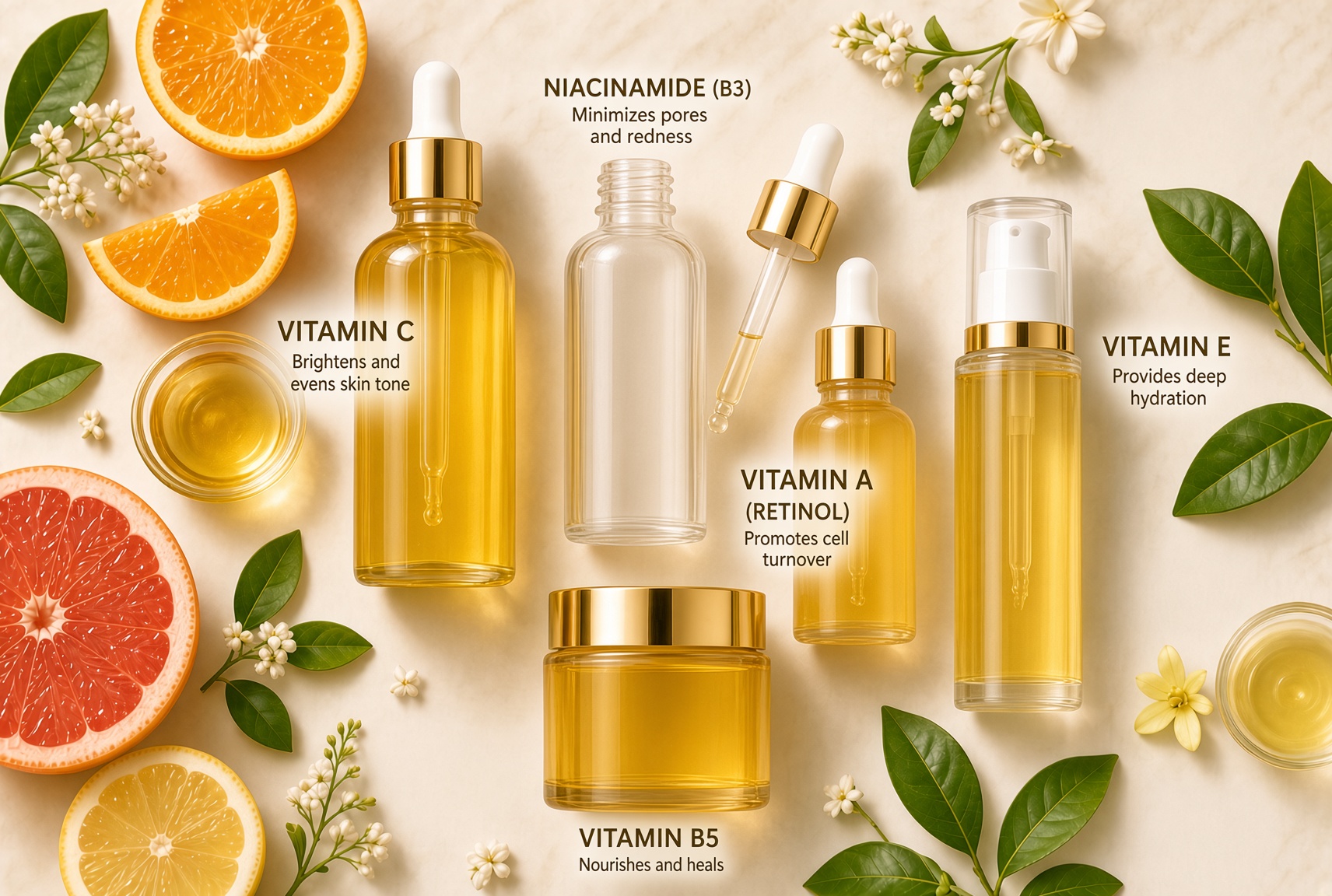
Supports cell turnover, collagen and elastin production, sebum regulation, and repair of UV damage. It helps with acne, fine lines, texture, and hyperpigmentation. Topical retinoids (retinol, retinaldehyde, prescription tretinoin) are among the most evidence-backed anti-aging and acne treatments. Dietary sources include liver, eggs, dairy, carrots, sweet potatoes, and leafy greens (as beta-carotene). Oral high-dose vitamin A requires caution due to toxicity risk.
Vitamin C (ascorbic acid and derivatives)
A potent antioxidant that neutralizes free radicals from UV and pollution, is essential for collagen synthesis (as a cofactor for enzymes that stabilize collagen), brightens skin by inhibiting tyrosinase (reducing melanin), and supports wound healing and barrier function. Deficiency impairs collagen and leads to fragile skin and poor healing. Topical L-ascorbic acid (typically 10–20%, low pH, stable packaging) has strong evidence for photoprotection, firmness, and fading spots; it pairs well with vitamin E. Oral intake supports systemic levels; food sources include citrus, peppers, berries, kiwi, broccoli, and tomatoes.
Vitamin E (tocopherols)
Protects cell membranes from oxidative damage, has moisturizing and anti-inflammatory effects, and regenerates oxidized vitamin C. It aids photoprotection and can help with dryness or inflammatory conditions. Often combined with vitamin C topically for synergy. Found in nuts, seeds, plant oils, spinach, and avocados.
Vitamin B3 (niacinamide/nicotinamide)
Strengthens the skin barrier, reduces inflammation and redness, regulates sebum, minimizes pores, improves texture and tone, and offers some photoprotection and DNA-repair support. Well-tolerated topically (often 2–10%) and useful for acne, barrier repair, and sensitive or reactive skin. Oral forms have been studied for skin cancer risk reduction in some contexts. Dietary sources include meat, fish, nuts, seeds, grains, and mushrooms.
Vitamin D
Supports skin immune function, barrier integrity, and antimicrobial peptide production; may help modulate inflammation in conditions like atopic dermatitis or psoriasis. The skin produces it with UV exposure, but many people have insufficient levels. Food sources include fatty fish, fortified dairy/cereals, and egg yolks. Supplementation is common when levels are low (test first).
Other notable mentions
- Vitamin B5 (pantothenic acid): Supports hydration, barrier function, and soothing; often in topical products.
- Minerals frequently discussed alongside vitamins (e.g., zinc for acne/inflammation support in some studies; selenium as an antioxidant cofactor).
- Collagen peptides (with vitamin C support) show evidence for modest improvements in hydration and elasticity with consistent oral use, though quality varies.
Oral vs. Topical
Topical application generally provides higher local concentrations and stronger evidence for visible improvements in aging, pigmentation, acne, and barrier issues (especially vitamin A derivatives, C, and niacinamide). Oral vitamins/supplements primarily correct deficiencies, support overall antioxidant status and collagen production systemically, and may aid photoprotection or inflammatory conditions—but results are often more modest unless a deficiency exists. A combined approach (nutrient-rich diet + targeted topicals + supplements if needed) is common.
Practical Tips
- Prioritize a varied diet rich in colorful produce, healthy fats, proteins, and whole foods as the foundation—supplements fill gaps rather than replace food.
- For topicals: Look for stable formulations (opaque, airtight packaging for vitamin C; start low and slow with retinoids to minimize irritation). Pair vitamin C + E in the morning under sunscreen; retinoids/niacinamide in the evening.
- Sun protection remains essential—antioxidant vitamins complement but do not replace sunscreen.
- Individual needs vary (acne-prone, barrier-compromised, mature, or reactive skin respond differently). Bloodwork can identify true deficiencies. Consult a professional or healthcare provider before high-dose supplements, especially fat-soluble vitamins (A, D, E, K) or if you have medical conditions/medications.
- Evidence is strongest for consistent use of proven topicals plus overall nutrition; many “beauty” supplements have mixed or limited high-quality data.