
Mandelic Acid Benefits & Uses

Mandelic acid is an alpha hydroxy acid (AHA) derived from bitter almonds. Its molecule is larger (~152 Da) than glycolic (~76 Da) or lactic (~90 Da), so it penetrates more slowly and stays more superficial. That is why it is usually the gentlest common AHA.
It still exfoliates, but it also has antibacterial and some sebum-regulating effects, and it can modestly interrupt excess melanin production. That combination is why it is used for acne, post-acne marks, and uneven tone rather than just “glow.”
What it is good for
- Inflammatory acne and congestion: helps clear surface buildup, has antibacterial activity, and can reduce oiliness. Clinic peels (often ~45% mandelic vs ~30% salicylic) have shown similar acne improvement with better tolerability; mandelic sometimes does better on inflamed papules/pustules, salicylic on comedones. Leave-on 5–10% products show more modest but real reductions.
- Post-inflammatory hyperpigmentation and uneven tone: speeds shedding of pigmented surface cells and is often preferred on medium-to-deeper skin tones because it is less likely than glycolic to trigger rebound PIH. Useful for acne marks, sun spots, and as support for melasma (not a standalone melasma cure).
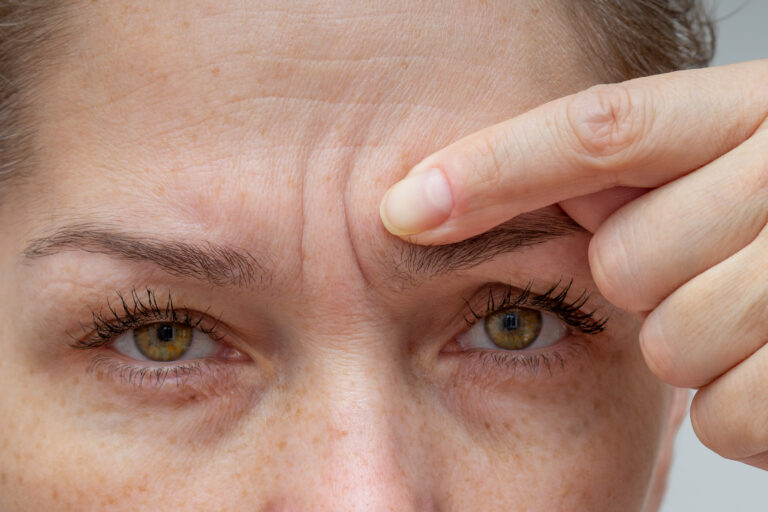
- Texture, dullness, fine lines: gradual smoothing and some collagen support. Slower than glycolic.
Sensitive, rosacea-prone, or barrier-wary skin: often tolerated when glycolic stings. Still an acid — not irritation-proof.
It is not a BHA. It does not dive into oily pores the way salicylic acid does. Many people pair them (or use a formula that already combines them) if blackheads are the main issue.
How it compares
| Mandelic | Lactic | Glycolic | Salicylic | |
|---|---|---|---|---|
| Type | AHA | AHA | AHA | BHA |
| Penetration | Slowest | Medium | Fastest | Oil-soluble, into pores |
| Irritation | Lowest of the AHAs | Medium | Highest | Medium (can dry) |
| Best fit | Sensitive skin, PIH, inflammatory acne | Dry/dehydrated + texture | Resilient skin, texture, lines | Congestion, blackheads |
| Speed of results | Gradual | Moderate | Fastest | Targeted to pores |
Leave-on products usually sit at 5–12%, ideally around pH 3.5–4.0. Professional peels run 20–40%+ and are a different category.
How to use it
- Evening, on clean dry skin.
- Start 2–3 nights a week. Increase only if the barrier stays calm.
- Do not stack the same night with retinoids, other AHAs/BHAs, or strong vitamin C until you know your tolerance. Alternate nights is the usual pattern.
- Follow with a bland moisturizer (ceramides, panthenol, HA are fine).
- SPF every morning. AHAs increase sun sensitivity.
Typical timeline: smoother/brighter in 1–3 weeks; acne and marks take 6–12 weeks of consistent use.
Side effects and cautions
Mild sting, tightness, or a short purge can happen. Persistent burning, peeling, or new redness means drop frequency or stop.
Avoid on broken skin, active eczema flares, or a wrecked barrier. Tree-nut allergy is a theoretical concern (most cosmetic mandelic is synthetic; still skip it if you react to almonds).
Pregnancy: topical leave-on mandelic is generally treated as one of the safer acids, but confirm with your clinician and skip high-strength peels.
Product types that make sense
- Simple leave-on serums: The Ordinary Mandelic 10% + HA, Naturium Mandelic 12%.
- Gentler blends: Paula’s Choice 6% mandelic + 2% lactic.
- Pigment-focused: Allies of Skin Mandelic Pigmentation Corrector (often stacked with other brighteners).
- Acne-focused: formulas that add salicylic (e.g. Sofie Pavitt Mandelic Clearing Serum).
Cleansers with mandelic are weak; leave-on contact time is what matters.