Rosacea

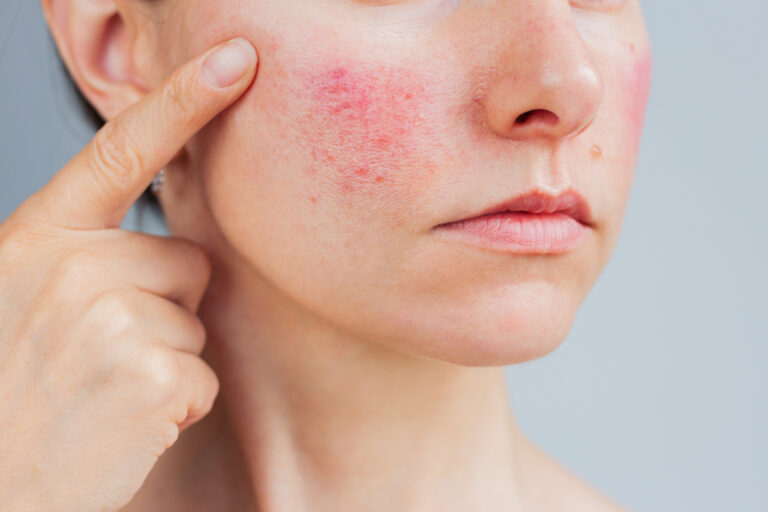
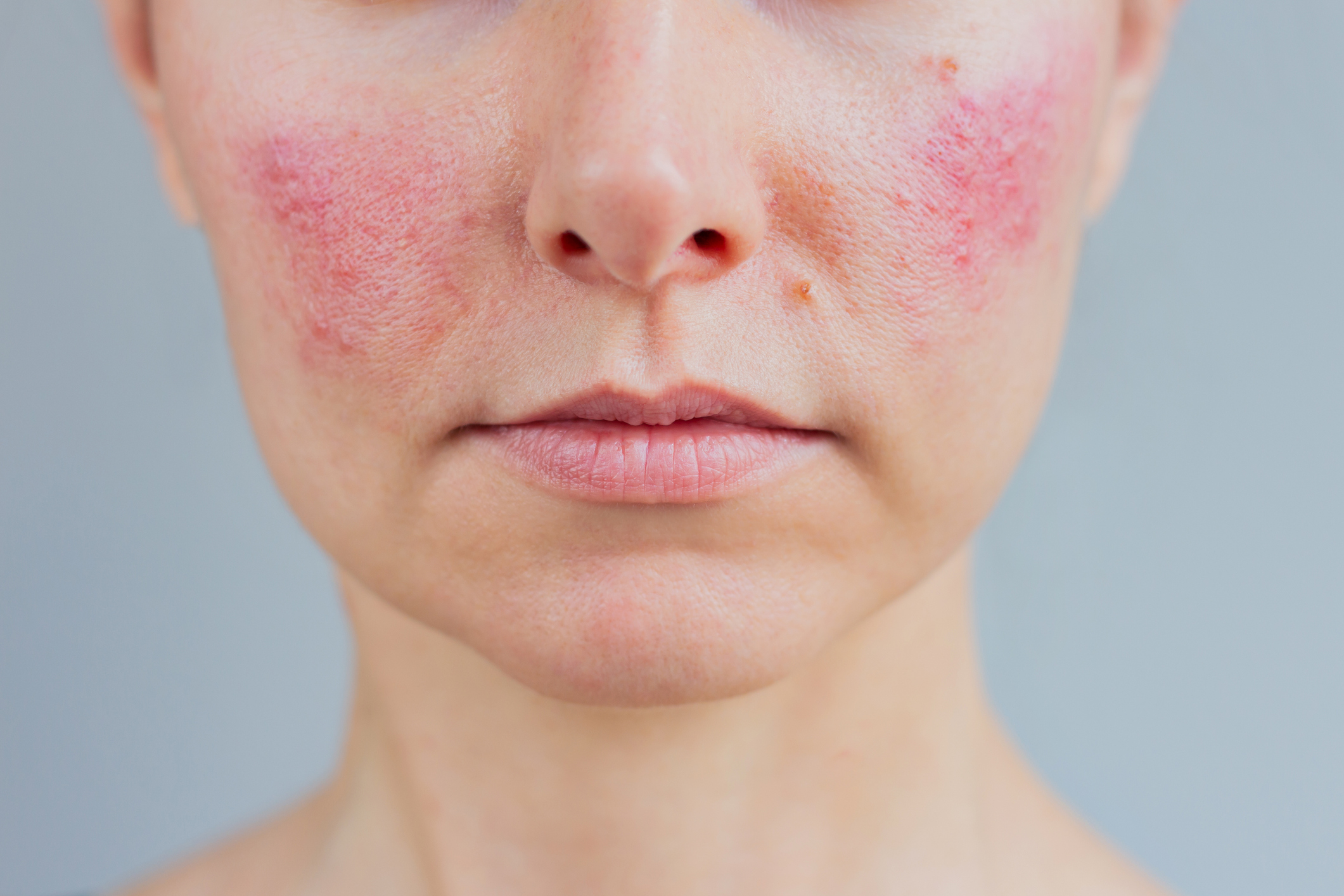
Rosacea is a chronic, inflammatory skin condition that primarily affects the face, most commonly in adults aged 30–60, and is more frequent in people with fair skin, light hair, and blue eyes. It often starts with a tendency to blush or flush more easily than others.
Common Signs and Symptoms
- Persistent facial redness (especially on cheeks, nose, chin, forehead)
- Visible small blood vessels (telangiectasia)
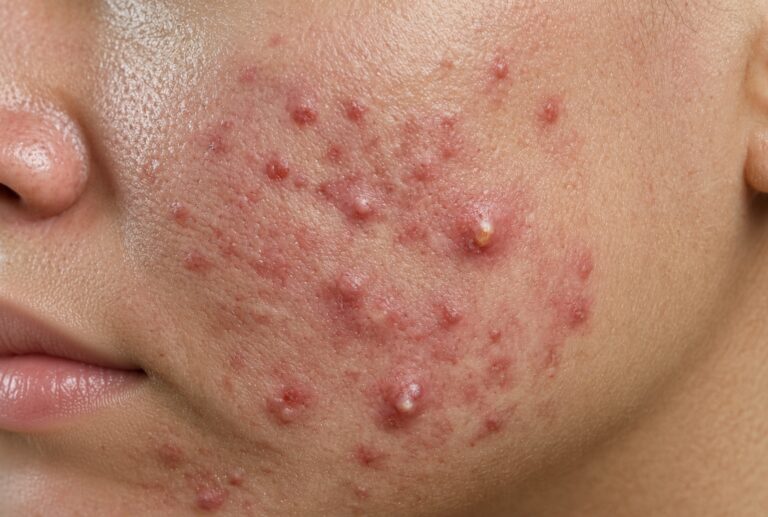
- Red, swollen bumps that can look like acne (papules and pustules)
- Burning, stinging, or itchy sensation
- Dry, rough, or scaly skin
- Eye irritation (ocular rosacea): watery or bloodshot eyes, gritty feeling, styes
Thickened skin, especially on the nose (rhinophyma) – more common in men and in advanced cases
Four Main Subtypes
- Erythematotelangiectatic (redness + visible blood vessels)
- Papulopustular (acne-like breakouts, often called “adult acne”)
- Phymatous (skin thickening, irregular surface, most often rhinophyma)
- Ocular (eye symptoms)
Common Triggers
- Sun exposure
- Hot drinks, spicy foods, alcohol (especially red wine)
- Temperature extremes
Stress - Strenuous exercise
- Certain skincare products (those containing alcohol, fragrance, exfoliants)
- Some medications (e.g., vasodilators, topical steroids if overused)
- Menopause night sweats, hormonal changes
Andropause
Treatment Options
- There is no cure, but it can be very well controlled.
- Medical treatments (prescribed by a dermatologist)
- Skincare treatments such as monthly facials with your Esthetician and a daily skincare regimen
Topical medications or products: metronidazole, azelaic acid, ivermectin, brimonidine, oxymetazoline.
Oral antibiotics (especially for papulopustular type): doxycycline (low-dose anti-inflammatory), minocycline, sometimes isotretinoin in severe cases.
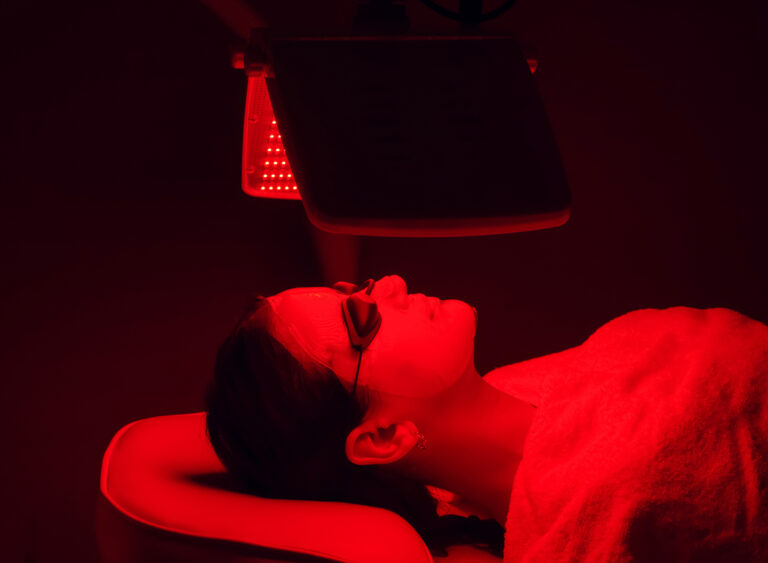
Laser and light therapies: IPL (intense pulsed light), vascular lasers (PDL, KTP, Nd:YAG) – excellent for redness and visible blood vessels.
Daily management & lifestyle
- Gentle skincare: non-soap cleansers, fragrance-free moisturizers
- Broad-spectrum sunscreen (SPF 30+ daily, mineral-based preferred)
- Avoid known triggers
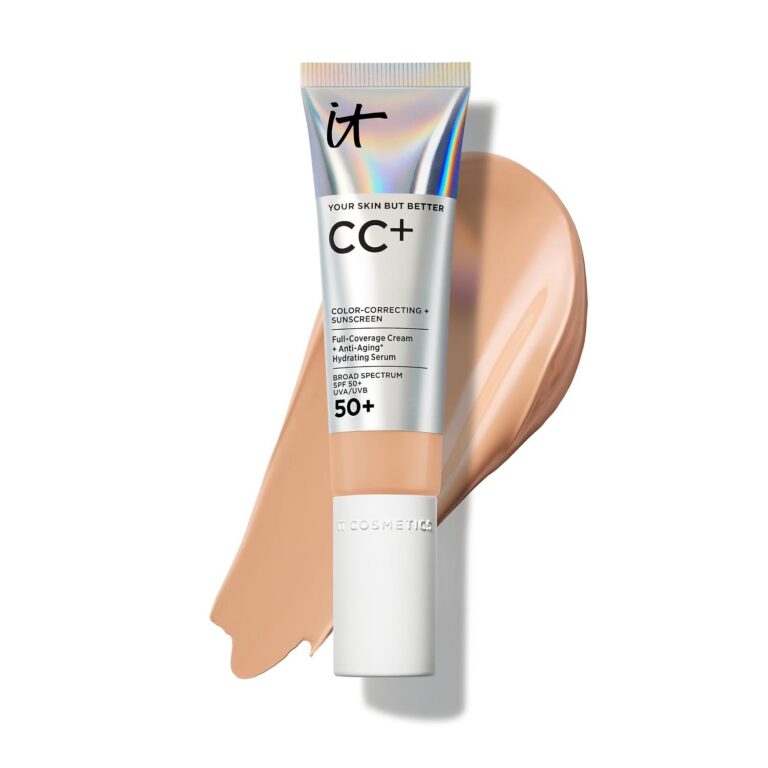
- Green-tinted primer/makeup can neutralize redness
- Cool compresses for flare-ups
Important Notes
It’s often misdiagnosed as acne, eczema, or lupus – see a dermatologist for accurate diagnosis.
Long-term use of topical steroids on the face can actually worsen or trigger rosacea (“steroid-induced rosacea”).
It tends to be progressive if untreated, so early intervention is helpful.
If you think you have rosacea or want personalized advice, a board-certified dermatologist or your Esthetician is the best person to see. Most people achieve excellent control with the right combination of treatments and trigger avoidance.
Managing rosacea involves gentle, fragrance-free, non-irritating products that soothe redness, strengthen the skin barrier, and avoid triggers like alcohol, harsh exfoliants, or fragrances. Dermatologists often recommend mineral-based sunscreens, hydrating cleansers, barrier-repairing moisturizers, and calming ingredients like centella asiatica, niacinamide, ceramides, azelaic acid, or hypochlorous acid.
Here are some of the best-rated and frequently recommended products available on Amazon (based on recent 2025-2026 reviews, dermatologist picks, and high ratings from sources like Byrdie, NBC Select, Everyday Health, and others). These are popular for rosacea-prone skin, but patch-test new products and consult a dermatologist, especially for prescription options like topical ivermectin or metronidazole.
Over the counter skincare products recommended:
Moisturizers
La Roche-Posay Toleriane Double Repair Face Moisturizer: Oil-free, with ceramides and niacinamide; excellent for daily barrier repair and reducing redness.
CeraVe PM Facial Moisturizing Lotion: Lightweight, night-friendly with niacinamide and hyaluronic acid; great for calming inflammation.
Dr. Jart+ Cicapair Tiger Grass Cream: Soothing with centella asiatica; highly praised for visibly reducing redness.
Sunscreens (Essential for Rosacea, as UV Triggers Flares)
EltaMD UV Clear Broad-Spectrum SPF 46 (tinted or untinted): Mineral-based (zinc oxide), oil-free, with niacinamide to calm redness; a derm favorite.
La Roche-Posay Anthelios Mineral Tinted Sunscreen SPF 50: Lightweight, tinted to neutralize redness without irritation.
CeraVe Hydrating Mineral Sunscreen SPF 50 — Affordable, hydrating, and gentle for daily use.
Targeted Treatments & Soothers
Prosacea Medicated Rosacea Treatment Gel — An over-the-counter option with sulfur; often tops Amazon best-sellers for reducing redness and bumps.
Tower 28 SOS Daily Rescue Facial Spray (with hypochlorous acid) — A mist that instantly soothes irritation and redness; National Rosacea Society-approved.
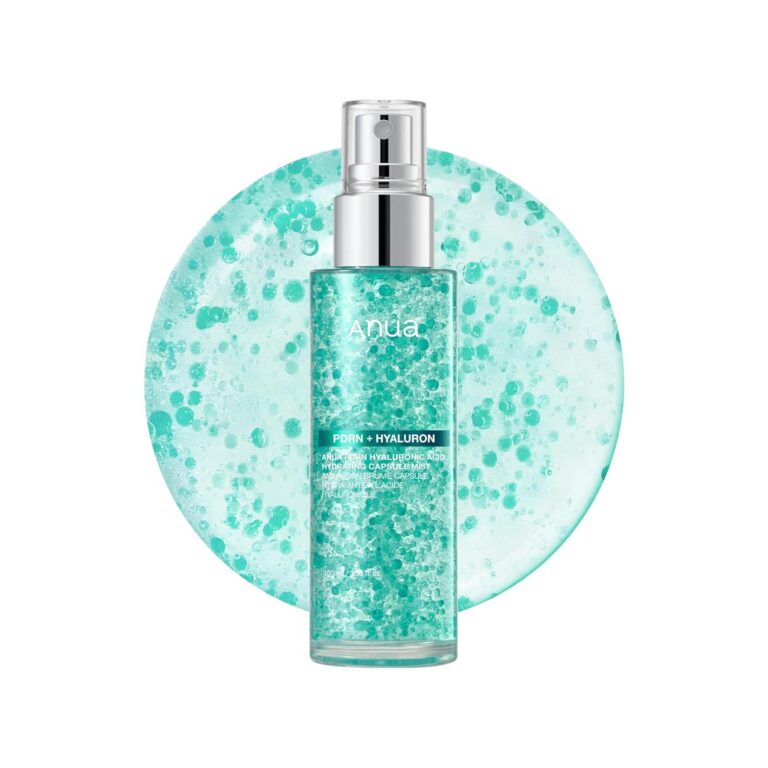
Paula’s Choice 10% Azelaic Acid Booster or similar azelaic acid serums (like Anua or The Inkey List versions): Helps with redness and bumps without harshness.