RF Microneedling Depth: Why Deeper is Not Always Better

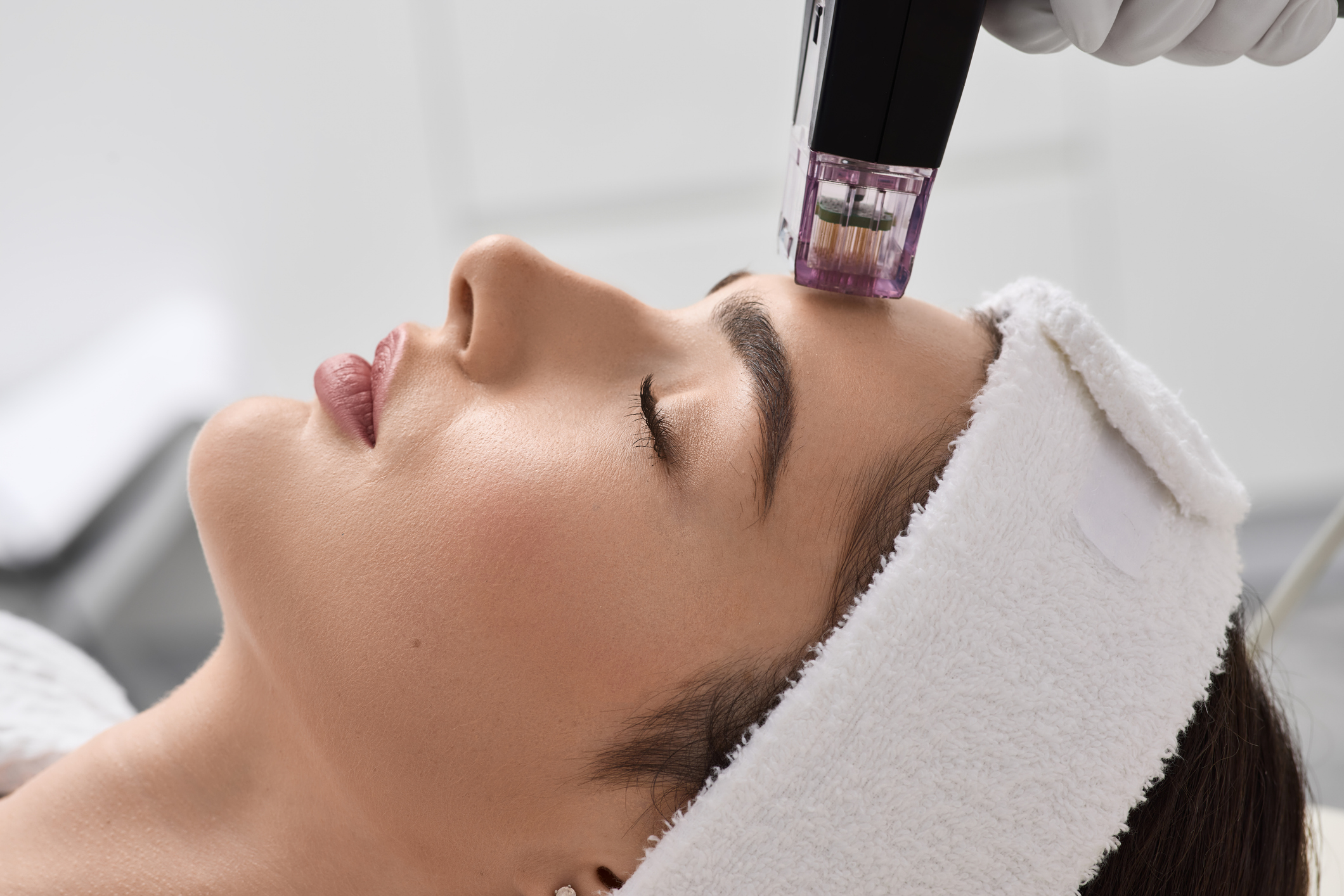
Deeper is not automatically better in RF microneedling because the goal is usually controlled heating of the dermis, not maximum needle travel. Once the energy leaves the dermis and hits fat, you stop gaining useful collagen remodeling and start adding risk.
What you are actually trying to hit
Facial dermis is thin and uneven. Published thickness data put dermal thickness on the face roughly in the 0.8–2.0 mm range, with eyelids and some periorbital skin much thinner than that. The useful target for tightening and texture is the reticular dermis. Fat sits immediately underneath.
RF does not stop exactly at the needle tip. Heat spreads around and beyond the tip, so a 2 mm setting can still warm tissue deeper than 2 mm, especially with high energy or long pulse duration.
Why extra depth backfires
Fat injury. Heating subcutaneous fat can cause delayed volume loss, hollowing, or an uneven “orange peel” look. This is the main reason “deeper = better” became controversial. The FDA has flagged fat loss among reported RF-microneedling complications, particularly when deep tips (4–8 mm class devices) are used on thin facial zones.
Wrong layer for the problem. Fine lines, texture, pigment, and most tightening live in the dermis. Going past that does not tighten skin more; it just treats a different tissue.
More trauma than payoff. Deeper passes mean more inflammation, longer downtime, and higher risk of PIH or textural issues, especially on thinner or darker skin.
Diminishing returns. Some histologic and clinical work shows coagulation volume and clinical result track energy and pulse duration as much as raw depth. Overly aggressive heat can even over-denature collagen instead of remodeling it.
That is why some experienced users now treat most of the face at 0.5–1.5 mm and reserve deeper settings for specific jobs. Conservative voices argue that 0.5 mm already sits in the mid-dermis on much of the face and that 2–4 mm on cheeks/temples/neck is how fat loss happens.
When deeper does make sense
Depth should follow anatomy + indication, not a default chart.
| Goal | Typical thinking |
|---|---|
| Texture, pores, fine lines, pigment | Stay relatively shallow (often 0.5–1.5 mm) |
| Atrophic acne scars | Match the scar floor; 1.5–2.5 mm (sometimes a bit more in thick cheek skin) is common |
| Neck / thin zones | Conservative; neck is unforgiving |
| Submentum / jowl fat (intentional contouring) | Deeper on purpose, because fat is the target |
| Body / thick skin | 2.5–4+ mm is more reasonable than on the face |
Insulated needles concentrate heat at the tip; non-insulated needles heat along more of the shaft. Same “mm” setting is not the same treatment on two different devices.
Practical takeaway
Ask what layer is being treated, not only what number is on the screen:
- Dermis for quality and tightening
- Scar base for pitted scars
- Fat only if contouring is the goal and the area can spare volume
A 3 mm pass on a thick cheek for a boxcar scar is a different treatment from a 3 mm pass under the eye or on a thin temple. The second one is how “deeper” becomes worse.