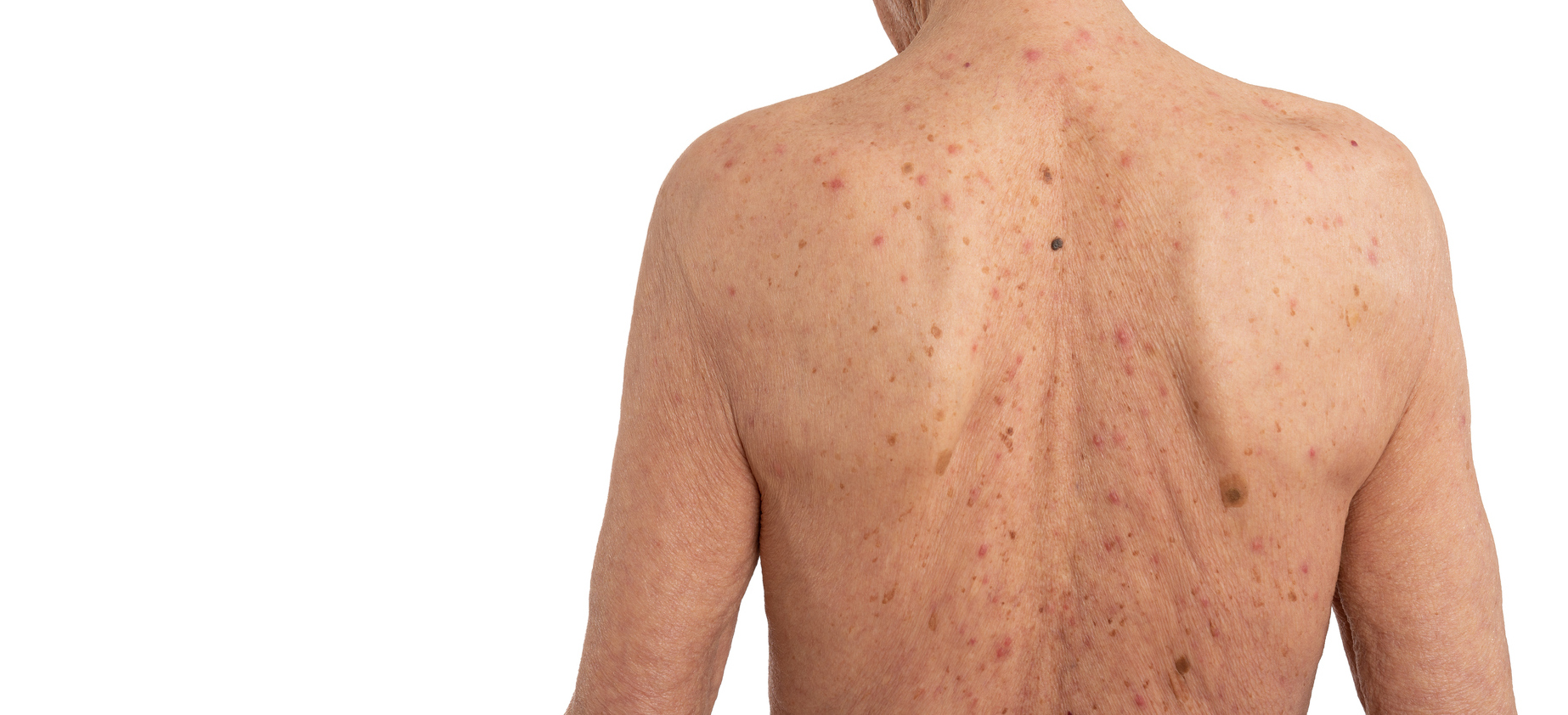
Actinic Keratosis: Symptoms, Causes, Treatment

Actinic keratosis (AK), also known as solar keratosis, is a common precancerous skin condition caused by long-term exposure to ultraviolet (UV) radiation from the sun or tanning beds.
It consists of rough, scaly patches or spots on sun-damaged skin and represents the most common precancerous skin lesion. While not cancer itself, some AKs can progress to squamous cell carcinoma (SCC), a type of skin cancer, if left untreated.
Symptoms and Appearance
AKs typically appear on sun-exposed areas such as:
- Face
- Scalp (especially bald areas)
- Ears
- Neck
- Backs of hands
- Forearms
- Lips (actinic cheilitis)
Common characteristics:
- Rough, dry, scaly, or crusty patches, often feeling like sandpaper.
- Flat or slightly raised, usually under 1 inch (2.5 cm) in diameter.
- Colors: pink, red, brown, tan, white, or gray; sometimes skin-colored.
- May itch, burn, sting, bleed, or become tender.
- Can develop a hard, wart-like or horn-like surface.
- Often more easily felt than seen; they may come and go.
Causes and Risk Factors
AK results from cumulative UV damage that alters skin cell DNA (particularly keratinocytes). Key risk factors include:
- Fair skin, light hair/eyes, tendency to freckle or burn easily.
- Older age (more common after 40).
- History of frequent sun exposure, sunburns, or indoor tanning.
- Living in sunny climates or outdoor occupations/recreation.
- Weakened immune system (e.g., from medications or conditions).
Diagnosis
A dermatologist usually diagnoses AK through visual examination. A skin biopsy may confirm it or rule out skin cancer if the lesion looks suspicious.
Treatment Options
Many AKs are treated to prevent progression to cancer and for cosmetic/comfort reasons. Options include:
- Cryotherapy (freezing with liquid nitrogen) — Quick for isolated lesions.
- Topical medications (e.g., 5-fluorouracil, imiquimod, diclofenac, or tirbanibulin) — Applied at home for multiple lesions; they treat visible and subclinical damage.
- Photodynamic therapy (PDT) — Uses a light-activated cream.
- Curettage or surgical removal — For thicker lesions.
- Laser therapy or chemical peels — In some cases.
Some small AKs may resolve on their own with sun protection, but monitoring is essential.
Prevention
- Daily broad-spectrum sunscreen (SPF 30+) and reapply often.
- Wear protective clothing, wide-brimmed hats, and UV-blocking sunglasses.
- Seek shade, especially 10 a.m.–4 p.m.
- Avoid tanning beds.
- Regular skin self-exams and professional dermatology check-ups (especially if you have a history of AK or skin cancer).
Important note: This is general information based on medical sources. AKs require professional evaluation—see a professional for personalized diagnosis and treatment, especially if you notice new or changing skin lesions. Early intervention is highly effective at preventing complications.