Acne Scarring Types & Treatments

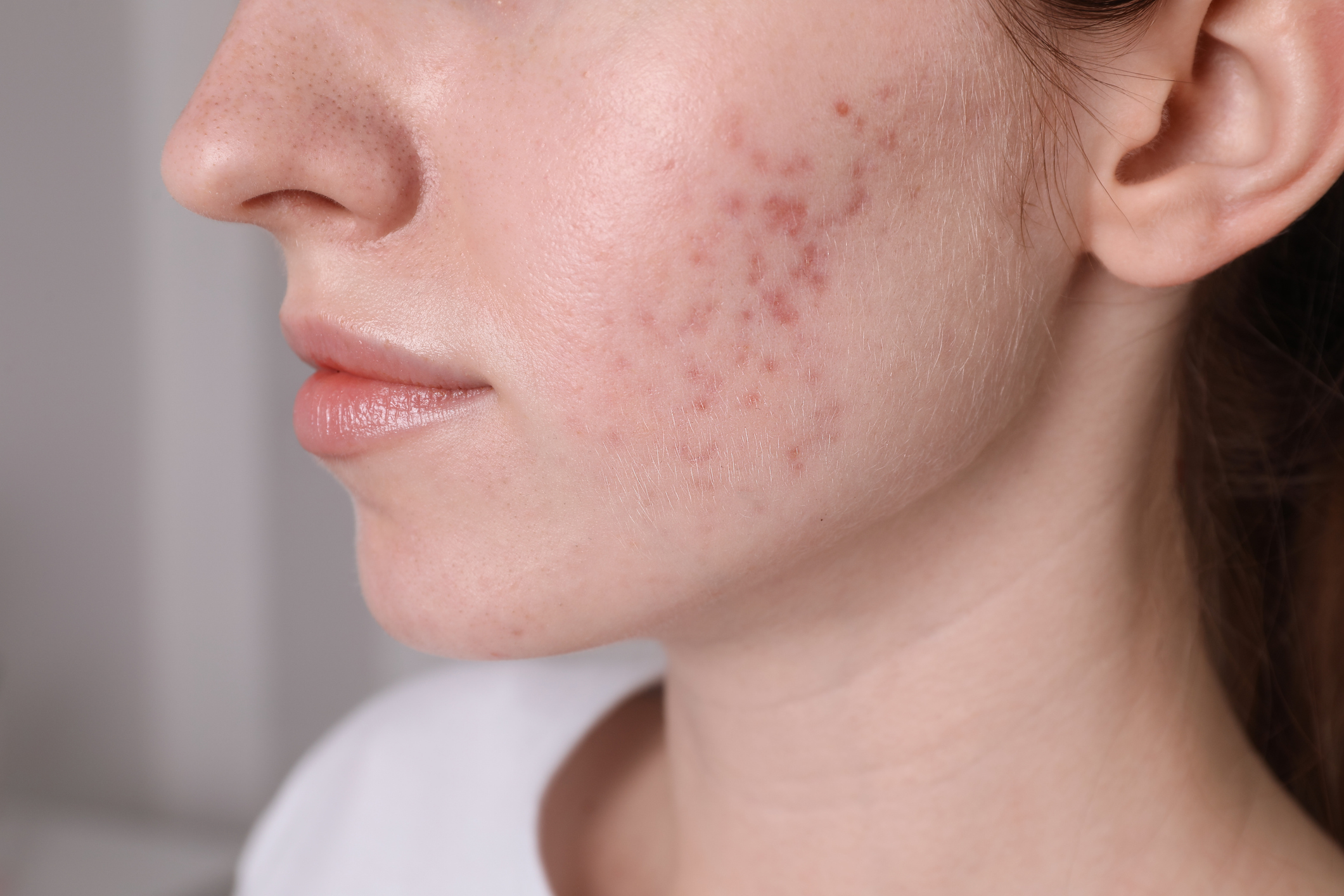
Acne scarring refers to permanent changes in skin texture or color that remain after acne lesions (especially inflammatory ones like cysts or nodules) heal. They result from inflammation damaging the skin’s deeper layers, where the body produces too little or too much collagen during repair.
Types of Acne Scars
Acne scars fall into two main categories: atrophic (depressed/indentations, most common) and hypertrophic/raised (less common on the face).
Here are the main types:
- Ice pick scars: Narrow, deep, pitted holes (like an ice pick or V-shaped). Often 60-70% of atrophic scars.
- Boxcar scars: Wider, rectangular or oval depressions with sharp, defined edges.
- Rolling scars: Broad, wavy or undulating depressions with sloping edges, giving a “rolling” appearance.
- Hypertrophic/keloid scars: Raised, thickened scars from excess collagen. More common on the chest/back; keloids extend beyond the original wound.
Post-inflammatory hyperpigmentation (dark spots) or erythema (red marks) often accompany or mimic scars but usually fade over time without true textural change.
Top causes of acne scarring stem from the skin’s inflammatory response and imperfect healing after breakouts. Acne scars form when inflamed pores swell, rupture the follicle wall, and damage surrounding tissue, leading to abnormal collagen production or loss during repair.
Primary Mechanism
Inflammation and tissue damage: Acne involves clogged pores, excess oil, bacteria (Cutibacterium acnes), and immune response. Deep or prolonged inflammation destroys collagen and elastin in the dermis, resulting in atrophic (indented/pitted) scars (most common, ~80-90% of cases) or hypertrophic/raised scars (excess collagen). Even superficial lesions can scar in susceptible people.
Top Risk Factors
Here are the most significant, evidence-based risk factors:
- Acne severity — The strongest modifiable factor. Moderate acne has ~2.3x higher odds and severe acne ~5.5x higher odds of scarring compared to mild. Nodular, cystic, or deep inflammatory lesions cause more damage than blackheads/whiteheads.
- Male gender — Men have about 1.6x higher risk than women, possibly due to higher androgen levels leading to more severe, inflammatory acne.
- Genetics/family history — Positive family history of acne (or scarring) increases risk significantly (~2.7x odds). Some people are predisposed to poor wound healing, excess or insufficient collagen production.
- Picking, popping, squeezing, or manipulating lesions — This spreads bacteria, deepens inflammation/trauma, and disrupts natural healing, dramatically raising scarring risk.
- Delayed or inadequate treatment / prolonged acne — Longer duration of untreated or poorly controlled acne allows more inflammation and tissue damage. Early-onset (adolescent) or relapsing acne also heightens risk.
Additional Contributing Factors
- Sun exposure — Worsens pigmentation (post-inflammatory hyperpigmentation) and slows healing.
- Skin type — Skin of color may be more prone to dark marks or keloids; very fair skin to redness/erythema.
- Other — Smoking (may worsen), hormonal fluctuations, truncal acne, and certain lifestyle factors. Younger age at onset correlates with more severe outcomes.
Prevalence: About 47% of people with acne develop some scarring (pooled from studies), though estimates range higher in severe cases. Up to 1 in 5 acne sufferers overall get noticeable scars.
Prevention (Most Effective Approach)
The best “treatment” is preventing scars in the first place:
- Treat acne early and aggressively with dermatologist-recommended routines (topicals like retinoids, benzoyl peroxide; orals if needed).
- Never pick or pop—use spot treatments instead.
- Gentle skincare: Cleanse softly, moisturize, use non-comedogenic products, and apply broad-spectrum sunscreen daily (SPF 30+ helps prevent darkening of marks).
- Manage underlying factors like hormones.
Early intervention dramatically reduces scarring risk.
Treatment Options
No single treatment fits all—results depend on scar type, skin tone, age, and severity. A dermatologist often combines approaches. Improvement takes time (months) and multiple sessions.
Topical/Home Care (mild cases or maintenance):
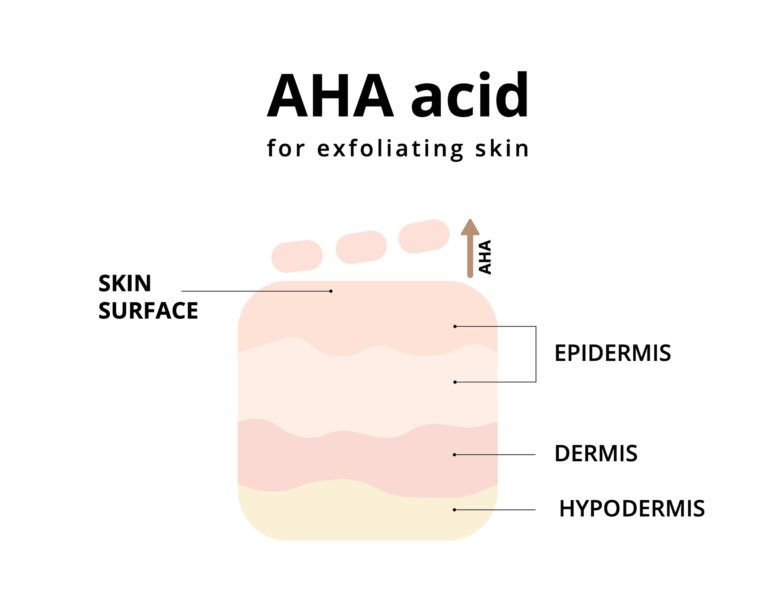
- Retinoids (tretinoin), azelaic acid, vitamin C, or hydroxy acids to improve texture and fade pigmentation.
- Sunscreen daily.
The top spa and medspa treatments for acne scarring focus on stimulating collagen production, resurfacing the skin, and improving texture and tone. These are most effective for atrophic (depressed) scars like boxcar, rolling, or ice-pick types, and post-inflammatory hyperpigmentation. Results vary by scar type, severity, skin tone, and number of sessions (usually 3–6+ for noticeable improvement). Always consult a qualified esthetician, dermatologist, or medspa professional for a personalized assessment, as some treatments carry risks like pigmentation changes, especially on darker skin tones.
Here are the most consistently recommended professional treatments available at spas:
1. Microneedling (Collagen Induction Therapy), Often with RF or PRP
This creates controlled micro-injuries to trigger the skin’s natural healing, boosting collagen and elastin to smooth scars and improve texture. Radiofrequency (RF) microneedling (e.g., Morpheus8, Vivace) adds heat for deeper tightening and remodeling. Adding PRP (platelet-rich plasma from your blood) or PRF enhances healing.
Best for: Most scar types, especially mild to moderate atrophic scars; also large pores and overall texture.
Downtime: 1–3 days of redness/mild swelling; minimal with shallower treatments.
Sessions: 3–6, spaced 4–6 weeks apart.
Why popular: Versatile, suitable for many skin types, and offers long-term collagen remodeling.
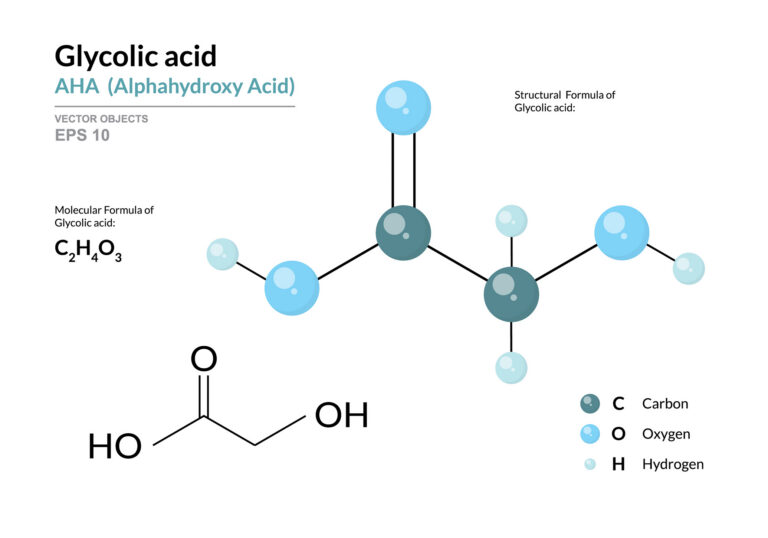
2. Chemical Peels (Medium to Deep, e.g., VI Peel, TCA, Glycolic, Salicylic)
These apply acids to exfoliate damaged outer layers, promote cell turnover, fade discoloration, and soften shallow scars. Customized strengths target acne-related pigmentation and texture.
Best for: Superficial scars, hyperpigmentation, and active acne prevention.
Downtime: 3–7+ days of peeling/flaking depending on depth.
Sessions: Series of 3–6.
Why popular: Affordable entry point with visible brightening and smoothing.
3. Laser Skin Resurfacing (Fractional CO2, Erbium, IPL/BBL, Picosecond, or Hybrid Lasers)
Fractional lasers create microscopic columns of treatment to resurface skin and stimulate deep collagen. Non-ablative or IPL/BBL options target redness and pigment with less downtime.
Best for: Moderate to severe scars, texture, and discoloration.
Downtime: 3–10+ days (longer for ablative CO2); milder for IPL/BBL.
Sessions: 1–5 depending on type.
Why popular: Precision and dramatic results for pitted scars.
4. Other Effective Options Often Combined
Dermaplaning A sterile surgical blade to gently scrape off the top layer of dead skin cells (stratum corneum) and fine vellus hair (“peach fuzz”). This provides immediate exfoliation and smoother texture.
Benefits for scars: It excels at addressing shallow, superficial acne scars (like mild rolling or boxcar types) by reducing surface roughness, promoting cell turnover, and improving overall evenness and brightness. It can make scars less noticeable and help fade post-inflammatory hyperpigmentation (dark marks). Some sessions also stimulate mild collagen production.
Facials for Acne Scarring
Facials vary widely — standard spa ones focus on cleansing and hydration, while clinical ones add exfoliation or resurfacing.
Helpful types:
Hydrafacial or DiamondGlow/microdermabrasion facials: Use suction and serums for deep cleansing, exfoliation, and infusion of antioxidants. Great for mild scarring, texture, and active acne management.
Enzyme or brightening facials: Gentler options for ongoing maintenance.
Effectiveness: Facials can noticeably improve mild scarring, tone, and texture over multiple sessions (e.g., monthly). They’re more about maintenance and prevention than dramatic repair. For moderate-to-severe scars, they’re often paired with lasers, microneedling, or fillers for better collagen stimulation.
PRP Therapy (alone or with microneedling): Uses your growth factors for regeneration.
Dermal Fillers (e.g., Bellafill for longer-lasting or hyaluronic acid): Immediately plump depressed scars.
Subcision: Releases tethered scars, often paired with fillers or PRP.
Combination approaches (e.g., microneedling + peels + lasers) often yield the best results.
Important Advice
- Consult a professional for personalized assessment—self-treatment risks worsening scars or pigmentation, especially on darker skin.
- Be patient: Full results can take 6+ months; maintenance is key.
- Active acne should be controlled first before focusing on scars.
Start with prevention and professional guidance for the best outcomes!