Psoriasis: Overview & Treatment

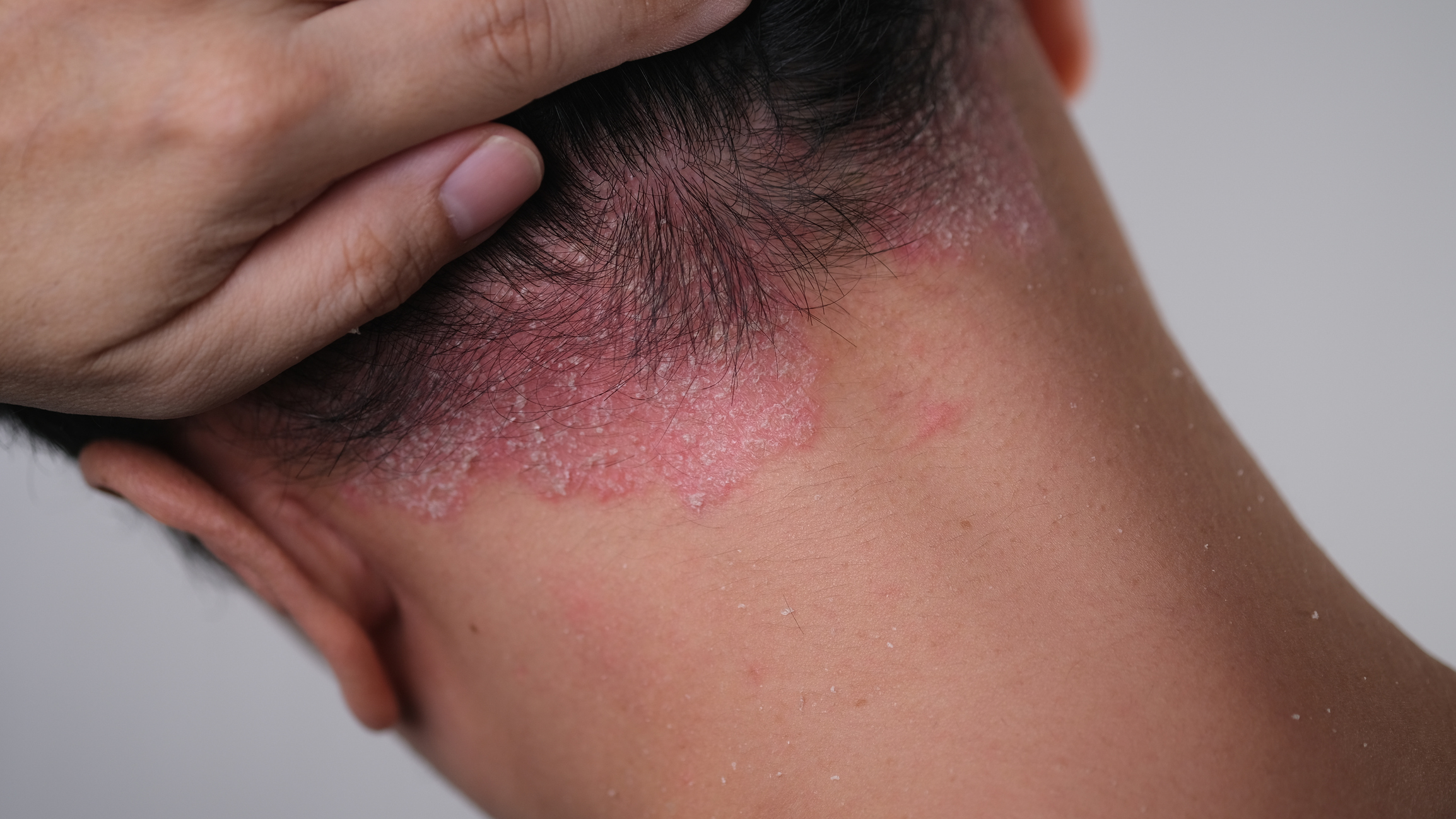
Psoriasis is a common, chronic autoimmune skin condition that causes rapid buildup of skin cells, leading to red, inflamed patches covered with thick, silvery-white scales. It affects about 2–4% of people worldwide (over 8 million in the U.S. alone) and is not contagious.
It often appears as itchy, scaly plaques, most commonly on the elbows, knees, scalp, lower back, and trunk, but can occur anywhere on the body. Symptoms can flare up for weeks or months before subsiding, and severity ranges from mild (small patches) to severe (large areas or even systemic effects).
Common Symptoms
- Raised, red (or purple/brown on darker skin tones) patches with silvery scales
Itching, burning, or soreness - Dry, cracked skin that may bleed
- Thickened or pitted nails
- Joint pain/stiffness (in cases of psoriatic arthritis, affecting up to ~30% of people with psoriasis)
Causes and Triggers
Psoriasis stems from an overactive immune system that speeds up skin cell turnover (from weeks to days), combined with genetic factors. It’s not fully understood, but common triggers include:
- Stress
- Infections (e.g., strep throat)
- Skin injuries
- Cold/dry weather
- Certain medications
- Smoking or heavy alcohol use
Treatment Options (as of 2025–2026)
There’s no cure, but many effective treatments clear skin for long periods. Options depend on severity:
- Mild cases — Topical treatments like corticosteroids, vitamin D analogs, PDE4 inhibitors (e.g., roflumilast/Zoryve cream or foam), or newer non-steroidal options.
- Moderate to severe — Phototherapy (light therapy), oral meds (e.g., methotrexate, apremilast/Otezla), or biologics/injectables targeting IL-17, IL-23, or other pathways (e.g., Skyrizi, Tremfya, Cosentyx, Taltz, Bimzelx — many now with excellent clearance rates and fewer side effects).
- Emerging/updated — JAK inhibitors and other targeted therapies continue to expand choices, with good results for hard-to-treat areas like scalp, palms/soles, or nails.
Spa treatments can offer soothing, complementary relief for psoriasis, particularly through balneotherapy (mineral-rich or thermal water baths), hydrotherapy, mud applications, and sometimes combined light therapy. These approaches focus on reducing inflammation, softening plaques, easing itching, and improving quality of life, often as an adjunct to medical treatments rather than a replacement.
Evidence from clinical studies and systematic reviews supports that spa-based therapies (like thermal/mineral baths) can significantly improve symptoms in many people, with reductions in PASI scores (a measure of psoriasis severity) and better skin clearance, sometimes lasting months. However, results vary by individual, and benefits are typically temporary without ongoing care or repeat visits.
Popular and Evidence-Based Spa Therapies for Psoriasis
Here are some of the most recognized options:
Dead Sea Climatotherapy
This is one of the most studied and renowned for psoriasis. It combines immersion in the ultra-salty, mineral-rich Dead Sea water (high in magnesium, bromide, etc.), mineral mud packs, and controlled sun exposure (natural filtered UV).
Studies show high clearance rates (often 70–90% improvement after 3–4 weeks), reduced scaling/inflammation, and remissions lasting several months. It’s especially effective for moderate to severe plaque psoriasis.
Many specialized resorts in Israel (e.g., Ein Bokek area) offer supervised programs. Recent follow-ups (including into 2024–2025) confirm it’s still highly regarded, with patients often preferring it over some conventional meds for its natural approach.
Blue Lagoon Geothermal Seawater Therapy (Iceland) Involves bathing in silica-rich, warm geothermal seawater, often combined with narrowband UVB light therapy under dermatologist supervision. Decades of research back its efficacy for clearing plaques and soothing skin.
Thermal/Hydrotherapy at European Spas (e.g., Avène in France, various in Hungary/Romania/Slovakia) Uses mineral spring or thermal water baths, filiform/underwater showers, scalp massages, mud packs, and sometimes light therapy. These target cleaning lesions, reducing inflammation, and hydrating skin. Avène’s programs are tailored for psoriasis/eczema, with anti-inflammatory benefits from the water’s composition. Randomized trials (like PSOTHERMES) show improved quality of life and symptom relief short- and longer-term.
General Spa Approaches
- Mineral/salt baths (e.g., Dead Sea or Epsom salts at home or spas) — Soften plaques and reduce itch.
- Mud therapy — Applied to affected areas to calm irritation.
- Gentle massages/hydrating treatments — Avoid abrasive ones; focus on soothing, moisturizing options like thermal masks or gentle facials/body wraps.
A 2022 trial found skin disease-oriented spa therapy safe and beneficial as complementary care.
Key Considerations
- Effectiveness — Best for plaque psoriasis; often provides noticeable improvement after 2–4 weeks of daily sessions. Not a cure—flares can return (e.g., average relapse in months for Dead Sea programs).
- Safety — Generally safe and low-risk when supervised (especially important with phototherapy to avoid burns). Avoid harsh scrubs, saunas, or anything traumatic that could trigger Koebner phenomenon (new plaques from injury). Med spas with aggressive aesthetics may not be ideal—stick to dermatology-focused or gentle hydrotherapy.
- At-Home Mimics — Add Dead Sea/Epsom salts to warm baths (15 min max), moisturize immediately after.
- Consult First — Always check with your dermatologist before starting, especially if on biologics, immunosuppressants, or have severe disease. They can guide if it’s suitable and monitor progress.
Here are some of the top-rated and best-selling over-the-counter (OTC) psoriasis products available on Amazon as of early 2026. These focus on popular moisturizers, medicated creams, and relief options with ingredients like salicylic acid (for exfoliation and scaling), coal tar, ceramides (for barrier repair), and hydrocortisone (for itch/inflammation). Ratings are generally high (4+ stars from thousands of reviews), and many are dermatologist-recommended or recognized by the National Psoriasis Foundation.
Top-Rated Psoriasis Products on Amazon
- CeraVe Psoriasis Moisturizing Cream (with salicylic acid and urea)
Frequently tops expert lists for dry, flaky skin. It hydrates, reduces itch/scaling, and repairs the skin barrier with ceramides. Fragrance-free and allergy-tested. Often praised for everyday use on body/scalp.
High ratings; a go-to for mild-moderate psoriasis. - MG217 Medicated Multi-Symptom Moisturizing Cream (with coal tar or salicylic acid variants)
One of the best for stubborn plaques—coal tar slows skin cell growth, while salicylic acid softens scales. Many users report good clearance of redness and flaking. Often ranked highly in “best coal tar” or “best salicylic acid” categories. - Gold Bond Multi-Symptom Psoriasis Relief Cream (with 3% salicylic acid + ceramides/moisturizers)
Strong contender for itch relief and hydration. Formulated to soothe irritated, scaling skin and help prevent recurrence. Popular in best-seller lists and user reviews for multi-symptom control. - Cortizone-10 Intensive Healing Lotion/Cream (1% hydrocortisone)
Often #1 or high in the Amazon best-sellers category for quick itch and inflammation relief. Good for flare-ups, though best for short-term use (not long-term on large areas). - Wild Naturals Eczema & Psoriasis Cream (with Manuka honey)
Natural-leaning option that’s highly rated for moisturizing dry, itchy skin. Users love it for soothing without steroids; often appears in “best natural” searches.
Other strong mentions:
- Curél Hydra Therapy Wet Skin Moisturizer — Excellent ceramide-based for locking in moisture post-shower.
- Dermarest Psoriasis Medicated Shampoo/Conditioner — Top for scalp psoriasis (if that’s a concern).
- Kenkoderm Psoriasis Moisturizing Cream — Combines salicylic + lactic acid for gentle exfoliation.
Quick Tips
- These are OTC, so great for mild cases or as complements to prescription treatments (e.g., biologics). Start with patch tests, especially if skin is very sensitive.
- Look for “Amazon’s Choice” badges or check current best-sellers directly on Amazon for real-time rankings/pricing (search “psoriasis cream” or visit the Eczema/Psoriasis category).
- Effectiveness varies—salicylic acid helps with scaling, coal tar with plaques, moisturizers with dryness/itch. Consult your dermatologist before combining with other treatments to avoid irritation.
A dermatologist can tailor a plan based on your skin type, affected areas, and overall health. Lifestyle steps like moisturizing, avoiding triggers, and managing stress often help too.
If this is something you’re dealing with personally, seeing a doctor (ideally a dermatologist) is the best next step for accurate diagnosis and management. The National Psoriasis Foundation (psoriasis.org) has great resources, support, and helplines.